Rating: 4 out of 5 stars
672 pages
Skippy Dies by Paul Murray is an extremely long, but intriguing novel. This book is very interesting, challenging and thought provoking; it is also funny and has great characters. The postmodern structure is brilliant.
Skippy Dies is split into three sections: 1. Hopeland, 2. Heartland, and 2. Ghostland.
In the very beginning the title character dies in a donut shop. He manages to write "Tell Lori" on the floor in donut jelly before dying. His real name is Daniel Juster, but everyone calls him Skippy.
Skippy is an oddball student at Seabrook College for boys. He has a roommate named Ruprecht, a scientific genius who wants to open the portal to other dimensions using ten-dimensional string theory. Skippy also hangs out with a boy nicknamed "MC Sexecutioner," among other weird characters.
The plot revolves around Skippy's love obsession Lori, who attends the girls school right next to Seabrook, who's involved with a drug dealer named Carl. There's also a teacher named Howard, who fell out of love with his live-in girlfriend. Howard falls for a gorgeous substitute teacher named Auriele and they have a brief fling that leads to nothing.
The highlights of the story are Ruprecht believing his experiment to get a figurine to another dimension worked after it disappeared, Lori's conflicted feelings for Carl and Skippy, Howard realizing he made a mistake when he dumped his girlfriend for Auriele, Ruprecht and others sneaking around the school to set up tools for communication with the dead, the creepy Father Green and his immoral desires, and the principal aka "The Automator" and his single-minded objective to get the school updated.
A scene that has a lot of emotional impact is when Ruprecht confronts Lori after Skippy's death and blames her for it. They have an argument that leads to a mutual understanding where they see a glimpse of humanity in each other despite their differences.
A major theme in this book is the fragility and fleeting nature of adolescence and how it impacts the rest of your life.
Skippy Dies offers a lot opportunity for character analysis though the title character remains a tragic mystery.
"Dreams are like that: too far-fetched to be tangible, yet too perfect to be abandoned." Tina McElroy Ansa
Tuesday, April 24, 2012
Monday, April 16, 2012
The Absolutely True Diary of a Part-Time Indian by Sherman Alexie
230 pages
The Absolutely True Diary of a Part-Time Indian is a painfully revealing look into the life of a teenager named Junior who lives on a reservation. He wants to be more than what he sees. Junior opens up describing his health condition
hydrocephalus. He talks about how he gets bullied and beat up by other kids on
the reservation. He keeps to himself and draws cartoons all the time. “I draw
because words are too unpredictable. I draw because words are too limited… so I
draw because I want to talk to the world. And I want the world to pay attention
to me.” He describes being extremely poor and how that affected his dog Oscar
who was dying for hours, but his family couldn’t afford to take him to the
veterinarian so Junior’s father euthanized the dog. Junior talks about how his
family has always lived on the reservation and in the same place, noting that
“no one paid attention to his parents’ dreams” which seemed to be a
generational cycle. Junior asserts: “But we reservation Indians don’t get to realize our
dreams. We don’t get those chances. Or choices. We’re just poor. That’s all we
are. It sucks to be poor, and it sucks to feel that somehow you deserve to be
poor, and it sucks to feel that you somehow
deserve to be poor. You start believing that you’re stupid and ugly because
you’re Indian. And because you’re Indian you start believing you’re destined to
be poor. It’s an ugly circle and there’s nothing you can do about it. Poverty doesn’t
give you strength or teach you lessons about strength or teach you lessons about
perseverance. No, poverty only teaches you how to be poor.”
When Junior contemplates running away his best friend Rowdy
tells him no one would notice. Rowdy is described as the toughest kid on the
“rez”. They hang out at his house and read comics together. On Junior’s first day of school at Wellpinit High School he
gets so angry about receiving a geometry book that belonged to his mother when
she was in high school that he throws it at his teacher Mr. P’s face. He gets
suspended for the incident. Mr. P visits his house and tells Junior that he has
to leave the rez forever! He tells
Junior that his older sister Mary was the smartest student he ever had and that
she wanted to be a romance writer. Now she spends all of her days in the
basement. “All these kids have given up. All your friends. All the bullies. And
their mothers and fathers have given up too. And their grandparents gave up and
their grandparents before them. And me and every other teacher here. We’re all
defeated.” Mr. P starts crying and says that the farther Junior gets away from
the rez the more hope he’ll have. Junior decides to go to Reardan High School
after his parents tell him white people have the most hope. “I had to multiply
hope by hope.” Rowdy is angry that he is transferring and refuses to go with
him. He screamed and punched Junior in the face.
Junior’s dad drove him to Reardan on his first day of school in his rundown truck. He
feels worthless when he stands outside the school. While he attends his classes
he develops feelings for a blond girl named Penelope and encounters a popular
jock named Roger who makes an extremely racist joke about Indians. Junior is so
angry he punches Roger in the face and makes him bleed. Roger and his friends
leave. When Junior tells his grandmother what happened she tells him it means
they respect you. Junior dresses like a homeless dude for Halloween and claims
he’s going to raise money for the poor to impress Penelope. He does end up
raising money, but gets jumped and robbed. Penelope feels sorry for him and
touches apart of his back where he was attacked.
Over the next few months Junior feels invisible and talks
about his struggles getting to and from school. He is shocked when his sister
gets married and moves to Montana with her husband. Eventually Junior is tired
of being lonely and approaches a nerdy boy named Gordy and asks him to be his
friend. They become friends and mostly study together. Junior comforts Penelope
after discovering she is bulimic. They start sort-of-dating and go to the
Winter Formal together. Junior wears one of his dad’s old suits. They go to a
diner and Junior feels sick about the fact that he doesn’t have any money.
Roger figures out that Junior is poor and pays for him. Junior’s high school
life changes dramatically when he makes the varsity basketball team against the
odds. When he plays against his former high school Rowdy knocks him unconscious
during the game and he goes to the hospital. Tragedy strikes his family when
his grandmother gets killed by a drunk driver. His dad’s best friend Eugene gets
shot and killed by his friend. Junior gets depressed and misses class a lot.
Gordy stands up for him in school after his teacher says he shouldn’t miss
class so much. The rest of the class drops their textbooks and leaves too.
The rematch against Wellpinit draws media attention and
Junior gets interviewed by a reporter. Junior starts the game and blocks Rowdy’s
opening game dunk and makes a three pointer. Reardan wins by a large margin and
he celebrates with his team, but he feels guilty and ashamed when he thinks
about Indians. He cries thinking about what the loss must have done to their
spirits. Reardan goes undefeated for the rest of the regular season. Tragedy
strikes again with the news of his sister’s death by fire. Junior becomes
hysterical when his dad takes him home from school. Rowdy is crying and says “Your
sister is dead because you left us. You killed her.” Junior’s classmates hug
him and support him. Penelope cries and hugs him. At the cemetery with his
parents Junior remembers his grandmother, Eugene, and his sister. “I mean, she
was amazing. It was courageous of her to leave the basement and move to
Montana. She went searching for her dreams, and she didn’t find them but she
made the attempt. And I was making the attempt, too. And maybe it would kill
me, too, but I knew that staying on the rez would have killed me, too.”
After many months of not speaking, Rowdy comes over to
Junior’s place over summer break and says he’s bored. They play a basketball game
and Junior realizes that Rowdy sees to accept Junior’s decision to go to
Reardan when he calls him nomadic. Rowdy says he’s okay staying where he is.
They don’t keep score of the game and play for hours.
Monday, April 2, 2012
Stargirl by Jerry Spinelli
Jerry Spinelli's Stargirl is a modern classic that addresses the importance of individuality and explores the impact of social conformity in this poetic, deeply moving story of a rare teenager who proved to others that being different is a gift and not a curse.
What happens when a girl who is carrying a pet rat, a ukulele, and a sunflower canvas bag, and is wearing a long flowing white pioneer dress without make up attends high school for the first time?
She sets the school abuzz. Everyone whispers about Stargirl. Who is she? Is she real? What kind of name is Stargirl? The reason why Stargirl causes such a scene is because of the type of town she lives in and the school she attended. The narrator reveals the social structure: "Mica Area High School--MAHS--was not exactly a hotbed of nonconformity. There were individual variants here and there, of course, but within pretty narrow limits we all wore the same clothes, talked the same way, ate the same food, listened to the same music. Even our dorks and nerds had a MAHS stamp on them. If we happened to somehow distinguish ourselves, we quickly snapped back into place, like rubber bands."
Leo Borlock is a junior at the same high school and he is completely
fascinated by Stargirl. He doesn't realize he is falling in love with her even
though he followed her for miles after school one day and stays up
late every night under the moon thinking about her. Leo poetically tries to capture her essence: "She was elusive. She was today. She was tomorrow. She was the faintest scent of a cactus flower, the flitting shadow of an elf owl. We did not know what to make of her. In our minds we tried to pin her to a cork board like a butterfly, but the pin merely went through and away she flew.”
Around the time Stargirl becomes unexpectedly popular, Leo and Stargirl begin a tentative relationship. Leo learns how to see the world through Stargirl's eyes: an unlimited space of possibility. He starts to notice what is going on around him and sympathizing with strangers. Leo lovingly declares that “she was bendable light: she shone around every corner of my day.”
In many ways Stargirl seems to take over Leo's whole life. He is willing to
accept it until Stargirl becomes a social pariah for her innocent, yet
unacceptable behavior as a cheerleader during basketball season. When Leo
notices he's become invisible to his peers due to his relationship with
Stargirl he begins to succumb to the pressure and influences Stargirl to
change.
After Stargirl realizes her "normal" teenage act isn't working she
becomes herself again and Leo makes his choice: the crowd is more important.
But that doesn't stop Stargirl from attending a school ball and winning the affections
of her fellow students in an unforgettably emphatic fashion when
she leads a bunny hop train.
Stargirl leaves after the ball and no one at the high school has ever seen
her since. Leo reflects on the light that Stargirl shined on his small
town and how she still impacts his life everyday fifteen years later.
He wonders if he there is still a has a chance to be with her. A gift he
receives the day before his birthday leads him to believe he does.
Though Stargirl compromised her identity to be with Leo, she's not the one
who changes at Mica High. Everyone around her does. She forces people to
rethink their views on society and behavior and what is acceptable and what is
true. She gave herself the perfect name. In less than a school year her legacy
lived on like the stars in the sky.
What happens when a girl who is carrying a pet rat, a ukulele, and a sunflower canvas bag, and is wearing a long flowing white pioneer dress without make up attends high school for the first time?
She sets the school abuzz. Everyone whispers about Stargirl. Who is she? Is she real? What kind of name is Stargirl? The reason why Stargirl causes such a scene is because of the type of town she lives in and the school she attended. The narrator reveals the social structure: "Mica Area High School--MAHS--was not exactly a hotbed of nonconformity. There were individual variants here and there, of course, but within pretty narrow limits we all wore the same clothes, talked the same way, ate the same food, listened to the same music. Even our dorks and nerds had a MAHS stamp on them. If we happened to somehow distinguish ourselves, we quickly snapped back into place, like rubber bands."
Stargirl Caraway is a uniquely eccentric 15 year old who attends public
school for the first time at Mica Area High School in Arizona. Her real name is
Susan, but she doesn't think it matches her and names herself
Stargirl during this time--she had other odd nicknames such as
"Pocket Mouse" before.
At first people think she is joking or is a ruse planted by the school
faculty to inject school spirit. After several months people start to believe
she's probably just crazy. The narrator tells readers that “she laughed when there was no joke. She danced when there was no music. She had no friends, yet she was the friendliest person in school. In her answers in class, she often spoke of sea horses and stars, but she did not know what a football was."
She also sings "Happy Birthday" to complete strangers in the cafeteria,
gives out cards and candy every day and says hi to everyone. What kind of person does
these things? Stargirl is a rare individual who does not care about social
mores. She is selfless and energetic in ways the narrator of the story, Leo
Borlock, can never understand. He explains the school's fascination with Stargirl: "We wanted to define her, to wrap her up as we did each other, but we could not seem to get past 'weird' and 'strange' and 'goofy.' Her ways knocked us off balance. A single word seemed to hover in the cloudless sky over the school: HUH?"
Around the time Stargirl becomes unexpectedly popular, Leo and Stargirl begin a tentative relationship. Leo learns how to see the world through Stargirl's eyes: an unlimited space of possibility. He starts to notice what is going on around him and sympathizing with strangers. Leo lovingly declares that “she was bendable light: she shone around every corner of my day.”
A wise teacher in the story explains the unique eccentricity of Stargirl: “It's in the morning, for most of us. It's that time, those few seconds when
we're coming out of sleep but we're not really awake yet. For those few seconds
we're something more primitive than what we are about to become. We have just
slept the sleep of our most distant ancestors, and something of them and their
world still clings to us. For those few moments we are unformed, uncivilized.
We are not the people we know as ourselves, but creatures more in tune with a
tree than a keyboard. We are untitled, unnamed, natural, suspended between was
and will be, the tadpole before the frog, the worm before the butterfly. We are
for a few brief moments, anything and everything we could be. And then...and
then -- ah -- we open our eyes and the day is before us and ... we become
ourselves."
Tuesday, March 6, 2012
The Hunger Games by Suzanne Collins
Rating: 4 out of 5 stars
376 pages
The Hunger Games is a thrilling young adult sci-fi dystopian novel that occurs in fictional Panem sometime in the future, presumably after an apocalyptic event in North America. The story is about a teenage girl named Katniss Everdeen who volunteers to take the place of her younger sister Prim in the 74th annual Hunger Games---a bloody tournament that features twenty four 12-18 year old contestants, called tributes, who must kill each other off until only one person remains alive to win the Games.
Katniss takes Prim's place during the selection ceremony in an emotional scene where she enters with her fellow District 12 lottery "winner" Peeta Mallarch. They have a past connection that helps them form an emotional bond during their preparation for the Games. They are mentored by infamous drunkard Haymitch, who is the only living Hunger Games victor from District 12.
When Katniss and Peeta arrive at the Capitol they are prepared by Stylists who make them glamorous for their reality show style interviews and presentations to the viewing audience---Capitol and District members. The whole process is surreal and Katniss experiences a lot of conflicting emotions. Haymitch advises her to run to safety the second the Games begin to increase her chances of survival.
Katniss follows Haymitch's advice and runs to the woods at the beginning of the Games. She hides in trees for a long period of time until the Gamemakers, who control the location and weapons of the tournament, decide her safety in not entertaining and blast fire at her so she would get out of the trees. Afterwards Katniss uses her bow and arrow hunting skills she acquired back home to survive until only a few tributes remain.
Katniss is nearly killed by fellow tributes twice, but Peeta saves her the first time, while she shoots her attacker the second time, but she loses her cute friend Rue in the process. At the very end of the Games Katniss and Peeta are still alive, but Katniss suggests they commit suicide instead of one killing the other. The Gamemakers choose to let them both live, though they view Katniss as a threat to the Capitol's authority henceforth.
After Katniss and Peeta return to District 12 there is an implication that the Capitol is plotting to punish Katniss for her rebellious act at the Games. There is a rift between Katniss and Peeta over the authenticity of their feelings for each other that is unresolved by the novel's end. Catching Fire, the sequel to The Hunger Games picks up where the cliffhangers leave off.
This novel can be quite disturbing at times, but what is truly disturbing is how possible it is in the modern technology, social media era. It can be viewed as a cautionary tale much like George Orwell's 1984 was purported to be.
376 pages
The Hunger Games is a thrilling young adult sci-fi dystopian novel that occurs in fictional Panem sometime in the future, presumably after an apocalyptic event in North America. The story is about a teenage girl named Katniss Everdeen who volunteers to take the place of her younger sister Prim in the 74th annual Hunger Games---a bloody tournament that features twenty four 12-18 year old contestants, called tributes, who must kill each other off until only one person remains alive to win the Games.
Katniss takes Prim's place during the selection ceremony in an emotional scene where she enters with her fellow District 12 lottery "winner" Peeta Mallarch. They have a past connection that helps them form an emotional bond during their preparation for the Games. They are mentored by infamous drunkard Haymitch, who is the only living Hunger Games victor from District 12.
When Katniss and Peeta arrive at the Capitol they are prepared by Stylists who make them glamorous for their reality show style interviews and presentations to the viewing audience---Capitol and District members. The whole process is surreal and Katniss experiences a lot of conflicting emotions. Haymitch advises her to run to safety the second the Games begin to increase her chances of survival.
Katniss follows Haymitch's advice and runs to the woods at the beginning of the Games. She hides in trees for a long period of time until the Gamemakers, who control the location and weapons of the tournament, decide her safety in not entertaining and blast fire at her so she would get out of the trees. Afterwards Katniss uses her bow and arrow hunting skills she acquired back home to survive until only a few tributes remain.
Katniss is nearly killed by fellow tributes twice, but Peeta saves her the first time, while she shoots her attacker the second time, but she loses her cute friend Rue in the process. At the very end of the Games Katniss and Peeta are still alive, but Katniss suggests they commit suicide instead of one killing the other. The Gamemakers choose to let them both live, though they view Katniss as a threat to the Capitol's authority henceforth.
After Katniss and Peeta return to District 12 there is an implication that the Capitol is plotting to punish Katniss for her rebellious act at the Games. There is a rift between Katniss and Peeta over the authenticity of their feelings for each other that is unresolved by the novel's end. Catching Fire, the sequel to The Hunger Games picks up where the cliffhangers leave off.
This novel can be quite disturbing at times, but what is truly disturbing is how possible it is in the modern technology, social media era. It can be viewed as a cautionary tale much like George Orwell's 1984 was purported to be.
Monday, February 6, 2012
The Alchemist by Paulo Coelho
Rating: 5 out of 5 stars167 pages
The Alchemist is Paulo Coelho's landmark masterpiece that literally and symbolically tells readers to follow their dreams no matter what feelings they have or what obstacles they face. This message is delivered through the story of a young shepherd named Santiago living in Andalusia who embarks on a turbulent journey of faith after having a recurring dream in an old church. Santiago is often certain about his life experiences and the decisions he makes until he has a dream about a child who led him to the Egyptian pyramids and told him if he came there he would find his treasure. He goes to woman who reads palms so she can interpret the dream. The woman says that he won't have to pay her if he promises to give her one-tenth of his treasure. Santiago agrees but he thinks the woman is a fraud.
As Santiago prepares to sell wool to a merchant in town he encounters a strange old man while reading a book. The man tells him that the book perpetuates one of the world's greatest lies, that humans don't control their fate. The old man reveals himself to be the King of Salem, Melchizedek. He tells the shepherd that he must follow the dream and also reveals to the boy things about his life that he's never told anyone. He also tells the boy that he needs to pursue his Personal Legend. Santiago decides to give up his life as a shepherd and cross the seas to find his treasure. After selling his sheep, he leaves his country to achieve his Personal Legend--accomplishing the purpose of his life.
When Santiago arrives in Africa he talks to a man at a bar who tells him there are a lot of thieves in the area and that he would help Santiago cross the desert to the pyramids. Santiago gives the man all his money and walks through the market with him to buy camels. While Santiago is momentarily distracted, the man disappears. Santiago stands in the marketplace for hours in shock. Eventually Santiago decides his dream was foolishness and that he would have to save up to return to his country. He meets a crystal merchant and is able to persuade him to offer a job in his shop on the hill. Santiago's presence in the crystal shop increases the sales and attracts a lot of customers. The crystal merchant reveals to Santiago that he has wanted to go to Mecca his whole life, but is now content to only dream about it. Santiago saves money to go back home and makes plans to become a shepherd again. He leaves the crystal shop after eleven months, but instead of going home he goes to a warehouse to find out how far away the Pyramids are.
Santiago joins a caravan that is crossing the desert. During his trip with the caravan he meets an Englishman who is studying the secrets of alchemy and wants to meet the alchemist who lives in the desert. They talk and become acquaintances. When the caravan arrives at an oasis named Al-Fayoum they settle there to wait for a tribal war to end. The Englishman asks Santiago to help him find someone who knows where the alchemist is. After asking several people Santiago meets a young woman named Fatima at a well and instantly falls in love with her. She tells him where he can find the alchemist and Santiago tells the Englishman. Santiago and Fatima meet at the well for several days and talk for about fifteen minutes each time. Santiago confesses that he loves her and is looking for his treasure. Fatima tells him to go search for his treasure and she'll be waiting for him when he returns. One evening Santiago has a vision about a tribe coming to attack the oasis. He tells the leaders of the oasis and they decide to prepare for an attack. Santiago's vision comes true and he is named the counselor of the oasis.
The alchemist learns of Santiago's vision and visits Santiago to see if he can be his disciple. The alchemist acts as his guide on his journey to the Pyramids. Along the way the alchemist teaches Santiago important lessons about life and the world. When Santiago admits that he is afraid his heart will suffer while pursuing his treasure the alchemist tells him "tell your heart that the fear of suffering is worse than the suffering itself. And that no heart has ever suffered when it goes in search of its dreams, because every second of the search is a second's encounter with God and with eternity." After traveling across the desert for days the alchemist and Santiago are taken captive by one of the tribes at war. The alchemist convinces the chiefs of the tribe to spare their lives by saying his apprentice can turn into wind. Santiago is frightened to death because he does not know how to turn into wind and he has only three days to learn how. On the third day Santiago went on top of the cliff and spoke to the desert, who told him to speak to the wind. When Santiago asks the wind to help him the wind demanded to know how he learned to speak the language of the desert and the wind. Santiago replied "my heart." After having a long conversation with the wind and the sun, Santiago began to pray and spoke to God. He learned that he can do anything with the power of God in himself and turns into wind.
The tribe lets Santiago and the alchemist continue their journey. When they reach a monastery the alchemist tells Santiago to go to the Pyramids by himself. He gives him a gold bar. When Santiago reaches the top of a dune and sees the pyramid he weeps. He begins to dig for his treasure after following an omen. After digging for many hours Santiago is ambushed and attacked by a group of men who are about to kill him after stealing his gold bar. When Santiago tells him he is digging for the treasure that he had a recurring dream about they decide to let him go because they think he's a fool. As the attackers leave, one man stays behind and says he had a recurring dream two years ago about treasure being in an old church across the seas with a sycamore tree growing out of it, but he wasn't stupid enough to pursue it. Santiago realizes that the treasure is where he had the dream about the Pyramids. He returns to his country and digs below the sycamore tree at the old church he dreamed at many months ago and finds a box of priceless treasures from centuries ago. When the wind blows on him he feels a kiss from Fatima and smiles. He tells her that he is coming.
Saturday, February 4, 2012
The Best Laid Plans by Sidney Sheldon
Rating: 4 out of 5 stars384 pages
Sheldon's 1997 suspense thriller is a rapidly paced story featuring his signature web of lies, deception, and murder, albeit this novel is less complex than his earlier works. In The Best Laid Plans the two main characters, Leslie Stewart and Oliver Russell are engaged to be married when Oliver suddenly ditches Leslie and marries the daughter of a powerful U.S. Senator. This acts as an explosive trigger to Leslie's underlying distrust of men since her father abandoned her as a child and she becomes obsessed with getting revenge on Oliver, who becomes the President of the United States.
Leslie marries the wealthy owner of an Arizona newspaper, who passes away a few years into their marriage. Leslie takes control of the newspaper and ruthlessly acquires newspaper companies around the country and expands worldwide as she closely watches Oliver Russell's presidential campaign and election. Leslie's plan to use her media power to damage President Russell's reputation becomes reckless when the President is a murder suspect of a governor's 7 year old daughter. As details of the case leak, more people are murdered in connection to the crime, making the President an obvious target. However, Leslie's machinations are ruined when the Washington Tribune's famous foreign correspondent Dana Evans finds out who really murdered the governor's daughter.
The President appears to be guilty due to his well-documented habit of having extramarital affairs and Leslie's memory of his connection to a drug called Liquid Ecstasy. President Russell admits to FBI officials that on the night the governor's daughter was murdered he was sleeping with an Italian ambassador's wife, unbeknownst to Leslie who has written a sensational headline that the President is wanted for six murders.
In a heart-pounding chain of events Dana Evans is talking to the sister of a man who was murdered in connection to the governor's daughter's murder when she is cornered by a hit man. Dana calls the Washington Tribune station and asks a staff member to put her on live because her cameramen had already set up. The hit man is captured attempting to murder Dana and the sister on national television while Dana reveals who is behind the murders. Leslie, who owns the Washington Tribune and was at the station when the breaking report came on, is horrified that her story on President Russell's impending arrest for the murders is wrong. Unfortunately, it was too late for her to recall the paper with that headline story. The editor-in-chief of the Washington Tribune warned her not to print it without all the facts, but Leslie was so desperate to take down the President that she became the victim of her own maniacal revenge plan, while the President was forced to face the reality of his careless philandering.
By the end of the novel Dana Evans emerges as the true heroine. It seems that the point of Leslie and Oliver's relationship and twisted long-term connection were to provide Dana with a happy ending. Sidney Sheldon's plotting isn't as sharp in this book, there are some definite holes and unnecessary details, but he still crafts an interesting juxtaposition between Leslie and Dana, along with realistically redeeming Oliver Russell's character after he becomes a murder suspect.
Tuesday, January 24, 2012
Glass by Ellen Hopkins
Rating: 3.5 out of 5 stars
688 pages
Glass is the second verse novel of the trilogy about crystal meth-addict Kristina Georgia Snow. Glass is a well-written, interesting, and informative novel on a difficult issue.
Kristina became hooked on crystal meth after using it with a friend during a summer visit with her Dad in the previous novel Crank. She picks up the deadly habit again right after she gives birth to her first child, a boy named Hunter.
The progression of her drug addiction and her thought processes are very realistic. The way she rationalizes her bad decisions and denies her logical thinking are classic addiction symptoms.
Kristina's situation is frightening not only because her life is in danger, but her baby's life is at risk at well. Fortunately for her son, Kristina's mother and stepfather adopt him and save him from Kristina's irresponsibility.
The worst part about Kristina's struggles with the drug is her inability to recognize exactly how low she is sinking and where she is heading due to her addiction.
A young woman named Robyn who Kristina used to get meth from ended up leaving college and working in a whorehouse to pay for her meth dependency, yet Kristina uses Robyn as a client for her drug deals. Kristina's downward spiral causes her to lose custody of Hunter, but she doesn't really care.
The novel ends with Kristina and her boyfriend Trent's arrest and the series continues with the next book Fallout.
688 pages
Glass is the second verse novel of the trilogy about crystal meth-addict Kristina Georgia Snow. Glass is a well-written, interesting, and informative novel on a difficult issue.
Kristina became hooked on crystal meth after using it with a friend during a summer visit with her Dad in the previous novel Crank. She picks up the deadly habit again right after she gives birth to her first child, a boy named Hunter.
The progression of her drug addiction and her thought processes are very realistic. The way she rationalizes her bad decisions and denies her logical thinking are classic addiction symptoms.
Kristina's situation is frightening not only because her life is in danger, but her baby's life is at risk at well. Fortunately for her son, Kristina's mother and stepfather adopt him and save him from Kristina's irresponsibility.
The worst part about Kristina's struggles with the drug is her inability to recognize exactly how low she is sinking and where she is heading due to her addiction.
A young woman named Robyn who Kristina used to get meth from ended up leaving college and working in a whorehouse to pay for her meth dependency, yet Kristina uses Robyn as a client for her drug deals. Kristina's downward spiral causes her to lose custody of Hunter, but she doesn't really care.
The novel ends with Kristina and her boyfriend Trent's arrest and the series continues with the next book Fallout.
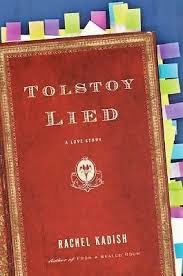
Tolstoy Lied: A Love Story by Rachel Kadish
Rating: 3.5 out 5 stars
336 pages
Tolstoy Lied is Kadish's second novel. The premise of this novel can be taken from a quote in the book, "People talk about culture wars over sexuality and race. But we're in a culture war over the nature and feasibility of happiness and no one even acknowledges it" (160). The main character, Dr. Tracy Farber, is a single 33-year old professor at a university in New York.
In the beginning of the novel Tracy is focused on her career--putting together her tenure packet, applying for fellowships, and an "ambitious" writing project where she claims Tolstoy is a liar about happy people. Tracy believes that in the world of literature scholars celebrate the works of tragedy and dismiss works with a even a hint of a happy ending, which affects writers who follow the status quo.
From the title of the book and the blurb this was purported to be the main idea, Tracy deciding she can be happy without marriage and kids though society insists that's what is needed for a happy life, which essentially stereotypes all happy endings.
This isn't really what the novel is about. In fact, Tracy's life appears to be boring and empty before she meets her love interest George. And I don't mean that Tracy was not invested in her career and was not passionate, it's just that there was rarely time for her big happiness project to develop before she turned into a typical romance novel heroine.
Tracy was reduced to a blubbering, whiny female too quickly. It is hard to buy that she was independent and happy to be single when she thought about her friends getting married and her being single several times early in the novel and met George soon after. Tracy is human of course, so she wasn't going to be oblivious to her marital status, but the grand happiness theory was barely explored before she met her man.
Tolstoy's name in the title convinced me this book was going to be more profound than other romance novels. Not so. It was formulaic. The meeting, the get together, the break up, the reunion. The really interesting element was not the "love story", but Tracy's workplace. There was a lot of cattiness and politics going on at her job, which included a very heartbreaking situation with a mentally ill graduate student. Those aspects of the story were worth analyzing and feeling personally offended over.
For instance--If you know that someone at your job is doing something very sinister, in a manipulative and difficult-to-prove manner, how would you handle it? Tracy was dealing with a professor in her department that was manipulative like Iago from Othello. It was disturbing what the woman did to Tracy and to her advisee Elizabeth. The professor who did her dirt and ruined people's lives out of spite did it with no remorse; she was a relentless snake. It was heinous what she did to Tracy and Elizabeth.
Back to the love story part. The problem with Tracy and George was that they weren't in sync when they got engaged. Tracy didn't even realize she was being proposed to when George "asked" her to marry him. It took them several months to get back together once Tracy had the courage to admit she felt he was rushing them into marriage. George was a nice enough guy, but he had some deep insecurities about his father and his ability to be head of the household for his own family. But in the end, he came back to Tracy and she welcomed him with open arms.
336 pages
Tolstoy Lied is Kadish's second novel. The premise of this novel can be taken from a quote in the book, "People talk about culture wars over sexuality and race. But we're in a culture war over the nature and feasibility of happiness and no one even acknowledges it" (160). The main character, Dr. Tracy Farber, is a single 33-year old professor at a university in New York.
In the beginning of the novel Tracy is focused on her career--putting together her tenure packet, applying for fellowships, and an "ambitious" writing project where she claims Tolstoy is a liar about happy people. Tracy believes that in the world of literature scholars celebrate the works of tragedy and dismiss works with a even a hint of a happy ending, which affects writers who follow the status quo.
From the title of the book and the blurb this was purported to be the main idea, Tracy deciding she can be happy without marriage and kids though society insists that's what is needed for a happy life, which essentially stereotypes all happy endings.
This isn't really what the novel is about. In fact, Tracy's life appears to be boring and empty before she meets her love interest George. And I don't mean that Tracy was not invested in her career and was not passionate, it's just that there was rarely time for her big happiness project to develop before she turned into a typical romance novel heroine.
Tracy was reduced to a blubbering, whiny female too quickly. It is hard to buy that she was independent and happy to be single when she thought about her friends getting married and her being single several times early in the novel and met George soon after. Tracy is human of course, so she wasn't going to be oblivious to her marital status, but the grand happiness theory was barely explored before she met her man.
Tolstoy's name in the title convinced me this book was going to be more profound than other romance novels. Not so. It was formulaic. The meeting, the get together, the break up, the reunion. The really interesting element was not the "love story", but Tracy's workplace. There was a lot of cattiness and politics going on at her job, which included a very heartbreaking situation with a mentally ill graduate student. Those aspects of the story were worth analyzing and feeling personally offended over.
For instance--If you know that someone at your job is doing something very sinister, in a manipulative and difficult-to-prove manner, how would you handle it? Tracy was dealing with a professor in her department that was manipulative like Iago from Othello. It was disturbing what the woman did to Tracy and to her advisee Elizabeth. The professor who did her dirt and ruined people's lives out of spite did it with no remorse; she was a relentless snake. It was heinous what she did to Tracy and Elizabeth.
Back to the love story part. The problem with Tracy and George was that they weren't in sync when they got engaged. Tracy didn't even realize she was being proposed to when George "asked" her to marry him. It took them several months to get back together once Tracy had the courage to admit she felt he was rushing them into marriage. George was a nice enough guy, but he had some deep insecurities about his father and his ability to be head of the household for his own family. But in the end, he came back to Tracy and she welcomed him with open arms.
I Wish I Had a Red Dress by Pearl Cleage
Rating: 5 out of 5 stars336 pages
The main character's sister in What Looks Like Crazy on an Ordinary Day is the focus in the delightful sequel to Pearl Cleage's debut novel. I Wish I Had a Red Dress tells the story of Joyce Mitchell, a widow who is determined to help the young women in Idlewild while finding inner peace.
Joyce is strong and optimistic despite losing her husband, parents, and children over the course of her life. She started a support group called the Sewing Circus to assist young mothers and spends countless hours setting an example and teaching them life lessons. There are challenges with funding, but Joyce works with her members to make ideas come to fruition to keep their program running.
While Joyce is concentrating on her serving her small town, she meets a handsome new staff member of the local high school, Nate Anderson, through her friend's maneuvering. Joyce is instantly attracted to him, but she is not sure is she's ready to date again. Nate understands her hesitation and respects her needs. When a member of the Sewing Circus is in danger with her ex-boyfriend Joyce and Nate work together to ensure the girl's safety.
By the novel's end Joyce decides to wear the red dress Nate bought for her and start the next phase of her life. After all her recent experiences she feels free enough to embrace a new love and continue her civic service without grieving over her past. Joyce has found the strength and healing she needed to move on. The theme of living life to the fullest regardless of the circumstances is eloquently demonstrated with maturity, respect and wisdom.
Quotations from I Wish I Had a Red Dress:
"I wish I had a red dress. I've been wearing black for so long I feel like one of those ancient women in the foreign movies who are always sitting around, fingering their rosary beads and looking resigned while the hero rides to his death on behalf of the people, or for the sake of true love, which is really six of one, half dozen of the other, when you think about it." (3)
“Life is much harder than anybody
can possibly tell you, but it doesn’t matter because even if they could, you
wouldn’t believe them and what good would it do anyway?” (8)
“A free woman …is someone who can fully conceive and consciously execute all the moments of her life.” (19)
“What’s the point of fighting for the truth if you’re not allowed to tell it?” (22)
“The advantage of faith in moments of crisis and transition is that when the rest of us find ourselves swimming in guilt, fear, confusion and second-guessing, the true believer simply goes with the flow.” (23)
“Come on,” she said. “Can you really imagine a world without men?” “Absolutely,” I said. “It’s a peaceful place full of fat, happy women and no football.” (27,28)
“Sometimes you have to give the correct even when you’re not really feeling it yet so you can hear how it’s going to sound when you finally get it together for real.” (31)
“A free woman …is someone who can fully conceive and consciously execute all the moments of her life.” (19)
“What’s the point of fighting for the truth if you’re not allowed to tell it?” (22)
“The advantage of faith in moments of crisis and transition is that when the rest of us find ourselves swimming in guilt, fear, confusion and second-guessing, the true believer simply goes with the flow.” (23)
“Come on,” she said. “Can you really imagine a world without men?” “Absolutely,” I said. “It’s a peaceful place full of fat, happy women and no football.” (27,28)
“Sometimes you have to give the correct even when you’re not really feeling it yet so you can hear how it’s going to sound when you finally get it together for real.” (31)
“We all laughed then, partly because it was funny, but partly because forgetting how to have a good time on Saturday night is as lethal as smoking crack. It just takes a little longer to kill you.” (61)
“If you did feel free, what would you do differently?” I looked at him. “Everything.” (258)
Wednesday, December 21, 2011
Home by Toni Morrison
Rating: 4 out of 5 stars
145 pages
Morrison's tenth novel tells the story of a young man named Frank Money who is struggling to reclaim his sense of self when he returns to his country after the Korean War. In the beginning of the book he escapes from a mental hospital where he doesn't recall how he got in there and flees South to rescue his dying sister Cee.
In the beginning of each chapter Frank reveals an event from his past that played a significant role in his development--specifically things that haunt him. He talks about witnessing a group of white men bury a black person's body with his sister and about a little Korean girl that was killed while he was on watch during the war. Each of these anecdotes connect to the larger narrative about him facing his past.
He chooses to go back to Georgia where he grew up to save his sister's life after receiving a letter about her health. He left behind living in the security of his hard-working, but fed up girlfriend's apartment in Chicago and travel alone despite his fears about his psychological stability.
Cee also fled from Lotus to escape from her past. She was jilted by a smooth talker who married her to take her grandmother's car. Cee was too embarrassed to go back home and stayed in the city. She found a job working for a doctor who performed experiments on her and was responsible for her near-death condition.
By the end of the novel Frank and Cee reunite and begin their path of healing mentally and physically. Frank begins to see that Lotus isn't as bad as he thought it was and Cee gains strength and newfound self-worth. They find the bones of the person the white men buried and give him a proper grave site. The last scene of the book where they walk back home is touching and poignant. I nearly cried.
Home is a simple, quick read. It isn't as heavy and complex as Toni's other works, but it has a strong message that doesn't need a momentous plot to get the point across.
145 pages
Morrison's tenth novel tells the story of a young man named Frank Money who is struggling to reclaim his sense of self when he returns to his country after the Korean War. In the beginning of the book he escapes from a mental hospital where he doesn't recall how he got in there and flees South to rescue his dying sister Cee.
In the beginning of each chapter Frank reveals an event from his past that played a significant role in his development--specifically things that haunt him. He talks about witnessing a group of white men bury a black person's body with his sister and about a little Korean girl that was killed while he was on watch during the war. Each of these anecdotes connect to the larger narrative about him facing his past.
He chooses to go back to Georgia where he grew up to save his sister's life after receiving a letter about her health. He left behind living in the security of his hard-working, but fed up girlfriend's apartment in Chicago and travel alone despite his fears about his psychological stability.
Cee also fled from Lotus to escape from her past. She was jilted by a smooth talker who married her to take her grandmother's car. Cee was too embarrassed to go back home and stayed in the city. She found a job working for a doctor who performed experiments on her and was responsible for her near-death condition.
By the end of the novel Frank and Cee reunite and begin their path of healing mentally and physically. Frank begins to see that Lotus isn't as bad as he thought it was and Cee gains strength and newfound self-worth. They find the bones of the person the white men buried and give him a proper grave site. The last scene of the book where they walk back home is touching and poignant. I nearly cried.
Home is a simple, quick read. It isn't as heavy and complex as Toni's other works, but it has a strong message that doesn't need a momentous plot to get the point across.
Saturday, December 17, 2011
The Other Side of the Sky by Farah Ahmedi
Rating: 4.5 out of 5 stars
249 pages
This apparent apathy is removed completely in the most touching chapter of the book “Talking to God”, where Farah finally allows herself to feel pain and breaks down by asking God to help her and her mother to move on from their intolerable living conditions as servants in Pakistan. There is a poignant scene where Farrah silently cries and submits herself to her faith and then sees a shooting star that she takes as a positive sign from God. From that point forward her life and her mother’s transforms for the better in a miraculous manner. Farrah’s recounting of her trip from Pakistan to America provides startling proof of how believing and having hope made a huge difference in her current situation and her future. By the end of the memoir it is clear from Farrah’s attitude and her progress that she has achieved her aim of providing a great example of how overcoming hardships can lead you to becoming a better person. The story of this brave, young Afghan woman is a testament of the strength of the human spirit and is highly recommended for readers looking for a role model and inspiration.
249 pages
The Other Side of the Sky is 2006 memoir written by Farah Ahmedi with Tamim Ansary that takes readers on a young girl’s journey from the war struck cities of Afghanistan to the frantic refugee camps of Pakistan and finally to the United States. Over a ten year period Farah goes through some of the most painful experiences imaginable, including losing her left leg after stepping on a land mine when she was seven years old to losing her father and her siblings after a bombing on her place of residence. She endured so much horror and confusion that it takes a lot of strength and courage for her to share her life’s story at just nineteen years old to offer inspiration and guidance.
Farah is initially reluctant to talk about her life, but a close friend of hers named Alyce assures her that even though she is still young, her story of survival is amazing and worth telling. Farah agrees to write this memoir and the results show that Alyce was right for encouraging her because Farah has a remarkable and unforgettably uplifting story to tell.
Farah opens her memoir with a prologue where she explains who she is in the present day and how she wonders about her past, and its effect on her. She then tells the readers she wants her story to show that she hasn’t lost her ability to love and dream despite everything she went through. Farah does an excellent job setting up the tales from her childhood by first describing a recent incident that causes her to have a shocking flashback, then moving through her life in chronological order to get to her current life in America.
The technique of moving from a recent episode that connects to her past life works brilliantly because readers get a sense of who Farah is as a person now, and then get an immediate opportunity to learn how she gets to where she is today. This strategy works well because Farah tells each chapter of her life with such precision that you never feel like something in the plot is out of place or unnecessary. In fact, Farah tells us nearly everything we need to know: what she is thinking, her reason for thinking the way she does, how she is coping with her problems, and how she feels about the things she witnesses and suffers through. She also gives vivid descriptions of the setting and time period to the best of her ability and admits what she doesn’t know and why she doesn’t know it. There is such a raw authenticity to her voice that at times you feel like you are having an actual conversation with her.
Throughout all the tragic events, particularly the land mine accident and her family’s deaths, Farah manages to keep a certain calm in the writing that can be unnerving at times, as if she is trying to block out the pain of the memories, and that is understandable. However, there is a sense that she is holding back in the chapter “Losing My Family” when she sees her house in ruins and the bodies of her father and sisters covered by sheets in the street. The reader disconnect occurs because Farrah’s descriptions seem to be told from an apathetic bystander’s perspective. On the other hand, it can be said that she is still feeling numbness towards the event even as she was writing about it. The technique of moving from a recent episode that connects to her past life works brilliantly because readers get a sense of who Farah is as a person now, and then get an immediate opportunity to learn how she gets to where she is today. This strategy works well because Farah tells each chapter of her life with such precision that you never feel like something in the plot is out of place or unnecessary. In fact, Farah tells us nearly everything we need to know: what she is thinking, her reason for thinking the way she does, how she is coping with her problems, and how she feels about the things she witnesses and suffers through. She also gives vivid descriptions of the setting and time period to the best of her ability and admits what she doesn’t know and why she doesn’t know it. There is such a raw authenticity to her voice that at times you feel like you are having an actual conversation with her.
This apparent apathy is removed completely in the most touching chapter of the book “Talking to God”, where Farah finally allows herself to feel pain and breaks down by asking God to help her and her mother to move on from their intolerable living conditions as servants in Pakistan. There is a poignant scene where Farrah silently cries and submits herself to her faith and then sees a shooting star that she takes as a positive sign from God. From that point forward her life and her mother’s transforms for the better in a miraculous manner. Farrah’s recounting of her trip from Pakistan to America provides startling proof of how believing and having hope made a huge difference in her current situation and her future. By the end of the memoir it is clear from Farrah’s attitude and her progress that she has achieved her aim of providing a great example of how overcoming hardships can lead you to becoming a better person. The story of this brave, young Afghan woman is a testament of the strength of the human spirit and is highly recommended for readers looking for a role model and inspiration.
Saturday, November 12, 2011
The Bridges of Madison County by Robert James Waller
Rating: 5 out of 5 stars
171 pages
The Bridges of Madison County is the ardently sensuous, heart-rending story of two star-crossed lovers named Francesca Johnson and Robert Kincaid. Francesca is a married farm wife living in Iowa. Robert is a traveling photographer for National Geographic. He pulls up to the front of her home one afternoon looking for directions to a bridge he has to take pictures of for an assignment. Francesca instantly feels an attraction to him and offers to ride with him to the bridge he needs to find. After that meeting, Robert and Francesca's lives are never the same again.
The novel begins with Francesca Johnson's children Michael and Carolyn contacting a writer in Iowa and requesting that he write the story of their mother and Robert Kincaid. The writer agrees to do the job and is amazed by the love story he researches and re-creates for a book. The story starts with Robert Kincaid's preparations to leave home in Washington and travel to Iowa to photograph the old covered bridges in Madison County, Iowa. He reflects on his life, including his failed marriage, his peculiar childhood and personality, and he even longs to have someone with him. When he arrives in Madison County he gets directions to the seven covered bridges from a local resident and finds six of them. After driving around and failing to find the seventh bridge, Roseman Bridge, Robert pulls his truck up to a mailbox labeled "Richard Johnson, RR2" to ask for directions and sees a woman sitting on the front porch. Francesca says to Robert that she'll show him if he wants, and is surprised because she normally wouldn't behave that way with a stranger. On the drive to Roseman Bridge Francesca starts to feel giddy and even smokes cigarettes that Robert gives her despite the fact that her husband Richard forced her to quit smoking a long time ago.
When they return to her house Francesca asks Robert if he would like an ice tea and offers to make him supper. He accepts. After he unloads his photography equipment from his truck to cool off, he enters the kitchen and settles in. While they are drinking and eating Robert asks Francesca how she likes Iowa. She reveals to him that it's a good place and the people are good, but it is not the life she imagined as a young girl. Robert tells her about his life and his profession. She tells Robert that her husband and children are away at the Illinois State Fair. Francesca feels drawn to Robert's poetic nature and his passion for his work. After supper they take a walk in the pasture and Francesca doesn't want the evening to end. When they return home she offers him a glass of brandy and they sit together drinking and smoking until Richard decides to leave. After they say goodbye Francesca drives her truck to Roseman Bridge and leaves a note there for Robert.
The next day Robert gets the note that says he can come over to have supper with Francesca after he finishes his photo shoot. He calls her and accepts the invitation. Then he invites her to come along with him while he's photographing one of the bridges. Francesca is worried that people in town will see her with him and gossip, but she tells him she'll meet him there in her pickup. They spend the day together at Cedar Bridge and Francesca is mesmerized by Robert's work and his presence. Robert goes home with her to wash off while she prepares their evening meal. After Francesca takes a bath and wears a brand new pink dress she bought that afternoon, Robert tells her that she looks absolutely stunning. Francesca falls in love with him at that moment. As the night goes on Robert and Francesca get closer and closer. When Robert asks Francesca to dance with him and she walks into his arms, they give in to their feelings and make love in her bedroom. Over the next four days Robert and Francesca are inseparable and passionately consume each other.
Robert declares to Francesca on the morning after their first night together: "This is why I'm here on this planet, at this time, Francesca. Not to travel or make pictures, but to love you. I know that now. I have been falling from the rim of a great, high place, somewhere back in time, for many more years than I have lived this life. And in all of those years, I have been falling toward you." But they eventually have to face reality that Francesca's family is coming home soon. When Robert suggests that he'll have a talk with her husband, Francesca tells him that it's not a good idea. She explains to Robert that she feels a sense of responsibility to her family and that she won't leave them. She also tells him she fears that if they started a life together they wouldn't be able to sustain their love the way it is at this moment because she'd be overcome with guilt for abandoning her husband and kids. Robert respects her decision and they choose to enjoy their remaining time together talking and making love.
While they are struggling with their imminent separation Robert whispers to Francesca "I have one thing to say, one thing only; I'll never say it another time, to anyone, and I ask you to remember it: In a universe of ambiguity, this kind of certainty comes only once, and never again, no matter how many lifetimes you live." Francesca and Robert say goodbye to each other on a Thursday afternoon, both of them fighting to let each other go. As Robert drives his truck out of her driveway she weeps and Robert cries as he drives down the road. Francesca's husband and children come home that evening. She tries hard to keep her composure, but several days later she sees Robert's truck leaving town and cries in front of her husband. Richard doesn't know why his wife has been so emotional and distant since his return. Francesca battles within herself to stand by her decision to continue to live a responsible life with her family. Over the next twenty four years of her life she thinks about Robert every day. After her husband dies she tries to contact Robert, but she finds out that he no longer lives in Washington or works for National Geographic. Her fear that Robert might be dead prevents her from continuing her search for him.
On her sixty-seventh birthday, Francesca reflects on her love affair with Robert and takes mementos from her drawer to remember every detail. She has a letter that Robert wrote to her shortly after he left Iowa and a photograph that he took of her on the pasture of her home. She also looks at the letter his lawyers sent her about the contents of his will. The letter states that his ashes were scattered at Roseman Bridge and he left her a letter thirteen years after they met. In the last letter Robert wrote to her he states that he is giving her his photography equipment and his medallion that had her name engraved in it. He updates her on his life at the time, saying he has a dog named Highway and that he left National Geographic. He ends the letter professing "I love you, profoundly and completely. And I always will." Francesca then reads the short story he wrote about his love for her called "Falling from Dimension Z." The book ends with Michael and Carolyn reading a letter from their mother after her passing where she reveals her love for Robert and the time they spent together. Michael and Carolyn now understand why their mother chose to get her ashes scattered at Roseman Bridge. They decide to hire a writer as a tribute to their love story. In the epilogue of the novel the writer finds out about the final years of Robert's life, from an interview with his friend, a jazz musician. The jazz musician tells the writer that the story that Robert told him about a woman he loved deeply inspired him to compose a song that he played for Robert at his club until he passed. The song was named "Francesca."
171 pages
The Bridges of Madison County is the ardently sensuous, heart-rending story of two star-crossed lovers named Francesca Johnson and Robert Kincaid. Francesca is a married farm wife living in Iowa. Robert is a traveling photographer for National Geographic. He pulls up to the front of her home one afternoon looking for directions to a bridge he has to take pictures of for an assignment. Francesca instantly feels an attraction to him and offers to ride with him to the bridge he needs to find. After that meeting, Robert and Francesca's lives are never the same again.
The novel begins with Francesca Johnson's children Michael and Carolyn contacting a writer in Iowa and requesting that he write the story of their mother and Robert Kincaid. The writer agrees to do the job and is amazed by the love story he researches and re-creates for a book. The story starts with Robert Kincaid's preparations to leave home in Washington and travel to Iowa to photograph the old covered bridges in Madison County, Iowa. He reflects on his life, including his failed marriage, his peculiar childhood and personality, and he even longs to have someone with him. When he arrives in Madison County he gets directions to the seven covered bridges from a local resident and finds six of them. After driving around and failing to find the seventh bridge, Roseman Bridge, Robert pulls his truck up to a mailbox labeled "Richard Johnson, RR2" to ask for directions and sees a woman sitting on the front porch. Francesca says to Robert that she'll show him if he wants, and is surprised because she normally wouldn't behave that way with a stranger. On the drive to Roseman Bridge Francesca starts to feel giddy and even smokes cigarettes that Robert gives her despite the fact that her husband Richard forced her to quit smoking a long time ago.
When they return to her house Francesca asks Robert if he would like an ice tea and offers to make him supper. He accepts. After he unloads his photography equipment from his truck to cool off, he enters the kitchen and settles in. While they are drinking and eating Robert asks Francesca how she likes Iowa. She reveals to him that it's a good place and the people are good, but it is not the life she imagined as a young girl. Robert tells her about his life and his profession. She tells Robert that her husband and children are away at the Illinois State Fair. Francesca feels drawn to Robert's poetic nature and his passion for his work. After supper they take a walk in the pasture and Francesca doesn't want the evening to end. When they return home she offers him a glass of brandy and they sit together drinking and smoking until Richard decides to leave. After they say goodbye Francesca drives her truck to Roseman Bridge and leaves a note there for Robert.
The next day Robert gets the note that says he can come over to have supper with Francesca after he finishes his photo shoot. He calls her and accepts the invitation. Then he invites her to come along with him while he's photographing one of the bridges. Francesca is worried that people in town will see her with him and gossip, but she tells him she'll meet him there in her pickup. They spend the day together at Cedar Bridge and Francesca is mesmerized by Robert's work and his presence. Robert goes home with her to wash off while she prepares their evening meal. After Francesca takes a bath and wears a brand new pink dress she bought that afternoon, Robert tells her that she looks absolutely stunning. Francesca falls in love with him at that moment. As the night goes on Robert and Francesca get closer and closer. When Robert asks Francesca to dance with him and she walks into his arms, they give in to their feelings and make love in her bedroom. Over the next four days Robert and Francesca are inseparable and passionately consume each other.
Robert declares to Francesca on the morning after their first night together: "This is why I'm here on this planet, at this time, Francesca. Not to travel or make pictures, but to love you. I know that now. I have been falling from the rim of a great, high place, somewhere back in time, for many more years than I have lived this life. And in all of those years, I have been falling toward you." But they eventually have to face reality that Francesca's family is coming home soon. When Robert suggests that he'll have a talk with her husband, Francesca tells him that it's not a good idea. She explains to Robert that she feels a sense of responsibility to her family and that she won't leave them. She also tells him she fears that if they started a life together they wouldn't be able to sustain their love the way it is at this moment because she'd be overcome with guilt for abandoning her husband and kids. Robert respects her decision and they choose to enjoy their remaining time together talking and making love.
While they are struggling with their imminent separation Robert whispers to Francesca "I have one thing to say, one thing only; I'll never say it another time, to anyone, and I ask you to remember it: In a universe of ambiguity, this kind of certainty comes only once, and never again, no matter how many lifetimes you live." Francesca and Robert say goodbye to each other on a Thursday afternoon, both of them fighting to let each other go. As Robert drives his truck out of her driveway she weeps and Robert cries as he drives down the road. Francesca's husband and children come home that evening. She tries hard to keep her composure, but several days later she sees Robert's truck leaving town and cries in front of her husband. Richard doesn't know why his wife has been so emotional and distant since his return. Francesca battles within herself to stand by her decision to continue to live a responsible life with her family. Over the next twenty four years of her life she thinks about Robert every day. After her husband dies she tries to contact Robert, but she finds out that he no longer lives in Washington or works for National Geographic. Her fear that Robert might be dead prevents her from continuing her search for him.
On her sixty-seventh birthday, Francesca reflects on her love affair with Robert and takes mementos from her drawer to remember every detail. She has a letter that Robert wrote to her shortly after he left Iowa and a photograph that he took of her on the pasture of her home. She also looks at the letter his lawyers sent her about the contents of his will. The letter states that his ashes were scattered at Roseman Bridge and he left her a letter thirteen years after they met. In the last letter Robert wrote to her he states that he is giving her his photography equipment and his medallion that had her name engraved in it. He updates her on his life at the time, saying he has a dog named Highway and that he left National Geographic. He ends the letter professing "I love you, profoundly and completely. And I always will." Francesca then reads the short story he wrote about his love for her called "Falling from Dimension Z." The book ends with Michael and Carolyn reading a letter from their mother after her passing where she reveals her love for Robert and the time they spent together. Michael and Carolyn now understand why their mother chose to get her ashes scattered at Roseman Bridge. They decide to hire a writer as a tribute to their love story. In the epilogue of the novel the writer finds out about the final years of Robert's life, from an interview with his friend, a jazz musician. The jazz musician tells the writer that the story that Robert told him about a woman he loved deeply inspired him to compose a song that he played for Robert at his club until he passed. The song was named "Francesca."
Monday, November 7, 2011
O Pioneers! by Willa Cather
Rating: 5 out of 5 stars
128 pages
O Pioneers! is a spellbinding novel about a young woman named Alexandra who builds up a Midwestern farm from terrible conditions after her immigrant father passes away. She stays single for most of her life to make her land prosperous as she takes care of her young brother Emil and is in charge of her other brothers Lou and Oscar as well. She is an unofficial early twentieth century mogul.
Alexandra is an acute, persistent business woman who developed and managed her father's dream land in a manner that would have made him so proud he would've died with a smile on his face had he lived to see the results of her labor. But that's not all there is to the story. There is her childhood friend Carl, her crazy tenant Ivar, and her attractive neighbor Marie, who is married, but has an emotional attachment to Emil. The novel features poignant, vivid imagery.
The climax is in some ways predictable, but unexpected. It unfolds at a rapid and suspenseful pace that leaves a feeling of shock. Through Alexandra's point of view the novel explores common themes such as love, feminism, and isolation in a subtle and engaging manner.
An interesting fact about this book is that it is written by an American woman and takes place during a key time period in U.S. history that is often overlooked. O Pioneers! should be in American school canons because it is a deeply moving, beautifully-written treasure.
128 pages
O Pioneers! is a spellbinding novel about a young woman named Alexandra who builds up a Midwestern farm from terrible conditions after her immigrant father passes away. She stays single for most of her life to make her land prosperous as she takes care of her young brother Emil and is in charge of her other brothers Lou and Oscar as well. She is an unofficial early twentieth century mogul.
Alexandra is an acute, persistent business woman who developed and managed her father's dream land in a manner that would have made him so proud he would've died with a smile on his face had he lived to see the results of her labor. But that's not all there is to the story. There is her childhood friend Carl, her crazy tenant Ivar, and her attractive neighbor Marie, who is married, but has an emotional attachment to Emil. The novel features poignant, vivid imagery.
The climax is in some ways predictable, but unexpected. It unfolds at a rapid and suspenseful pace that leaves a feeling of shock. Through Alexandra's point of view the novel explores common themes such as love, feminism, and isolation in a subtle and engaging manner.
An interesting fact about this book is that it is written by an American woman and takes place during a key time period in U.S. history that is often overlooked. O Pioneers! should be in American school canons because it is a deeply moving, beautifully-written treasure.
Subscribe to:
Posts (Atom)
.png)


.png)